
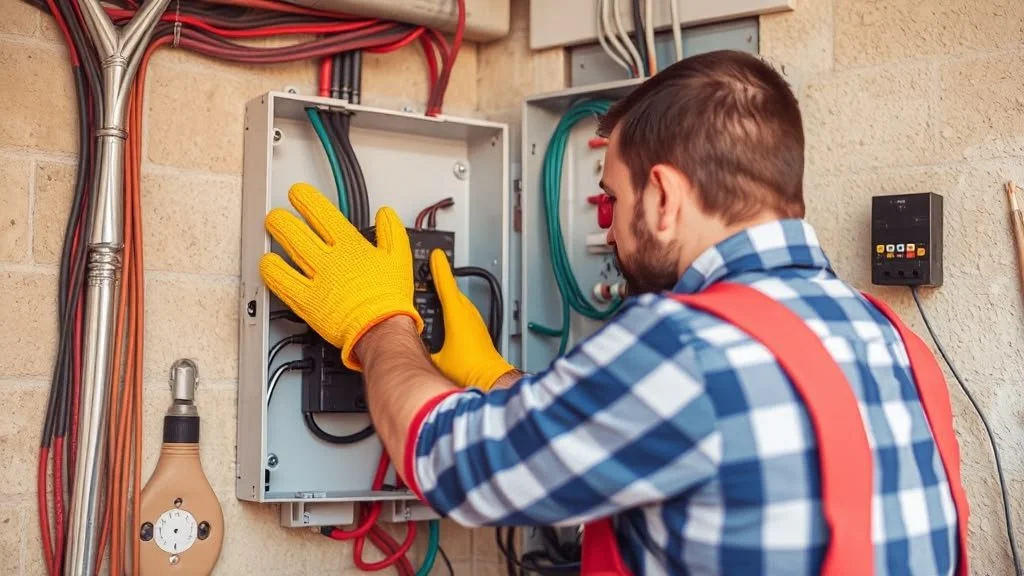
Electrical Panel Upgrades in Denver: What Property Owners Should Know Before Adding New Equipment
Modern buildings depend on more electrical equipment than ever. Businesses may be adding computers, machinery, lighting controls, and electric vehicle chargers, while homeowners are considering solar panels, battery storage, and high-demand appliances.
These changes can place new demands on an electrical system that was originally designed for a different level of use.
For property owners, electrical panel upgrades in Denver may become an important consideration when planning new equipment or addressing an aging electrical system. However, a panel upgrade is not automatically necessary for every renovation. The decision depends on the existing service capacity, electrical loads, equipment requirements, and applicable safety standards.
Understanding how an electrical panel works, what an assessment involves, and which project details influence the cost can help property owners make better decisions before installation begins.
1. What Does an Electrical Panel Do?
An electrical panel distributes electricity from the incoming service to the circuits throughout a building.
Circuit breakers protect individual circuits by interrupting power when certain overload or fault conditions occur. The panel also provides a central location for organizing and servicing the building's electrical distribution.
The capacity of the overall electrical service determines how much electrical demand the system can support under applicable requirements. A panel's physical appearance or the number of available breaker spaces alone does not establish whether the system has sufficient capacity.
For example, a property may have several unused breaker spaces but still lack the electrical capacity needed for a new high-demand appliance. Another property may have limited physical space in its panel but sufficient service capacity for its existing loads.
This is why a professional evaluation should consider the complete electrical system rather than relying on a quick visual estimate.
2. When Should You Consider an Electrical Panel Upgrade?
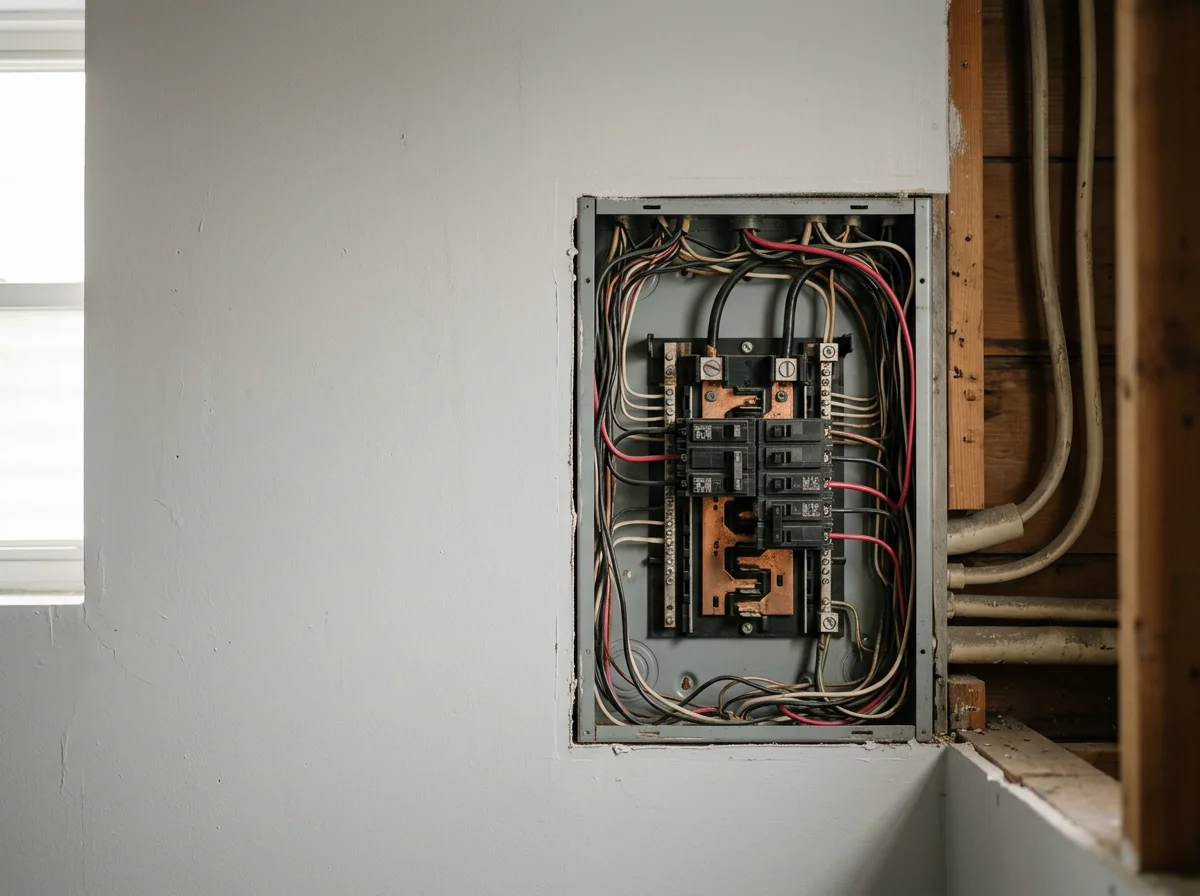
Several situations may justify an assessment of the existing electrical panel.
You are adding high-demand equipment
New machinery, heating and cooling equipment, electric ranges, EV chargers, or other electrical loads may require more capacity than the current system can support.
A qualified electrician can review the proposed equipment and determine whether the existing service can accommodate the additional demand.
You are planning solar or battery storage
Solar installation and battery backup involve more than mounting equipment and connecting wires. The existing electrical panel, inverter configuration, circuit arrangement, and utility requirements must be considered.
Depending on the system and the building, changes to the electrical infrastructure may be needed.
Your building is undergoing a major renovation
A renovation can introduce new lighting, appliances, equipment, and circuits. Reviewing electrical capacity early helps the design team understand whether the existing infrastructure is suitable for the planned changes.
Your electrical system has signs of a problem
Frequently tripping breakers, unusual heat, buzzing sounds, burning odors, or visible damage should not be ignored. These symptoms do not automatically mean that the panel needs replacing, but they can indicate a problem that requires prompt professional evaluation.
If you notice a burning smell, smoke, or other immediate danger, keep away from the equipment and contact emergency services or a qualified electrician as appropriate.
3. Understand the Difference Between a Panel Replacement and a Service Upgrade
These terms are sometimes used interchangeably, but they can describe different scopes of work.
A panel replacement involves replacing the existing distribution panel. Depending on the project, the incoming electrical service capacity may remain unchanged.
A service upgrade may involve increasing the capacity of the electrical service, which can require changes to service equipment, conductors, the meter arrangement, or utility connections.
Some projects require both a new panel and a service-capacity increase. Others may need only a panel replacement or a different solution, such as load management.
The correct approach depends on the existing installation and the proposed electrical loads.
Property owners should ask their electrician to explain precisely what is included in the recommendation. This makes it easier to compare proposals and understand whether the work addresses an immediate problem, future capacity requirements, or both.
4. Evaluate Electrical Capacity Before Adding an EV Charger
Home EV charging is a common reason property owners investigate their electrical systems.
A Level 2 charger generally requires a dedicated circuit and a suitable 240-volt supply. The required circuit capacity depends on the charger's specifications, its configured charging current, and applicable electrical requirements.
However, installing a charger does not automatically mean that the entire electrical panel must be replaced.
An electrician should assess the existing service, other household loads, available capacity, charger location, and wiring route. In some cases, the installation may be possible without a service upgrade. In others, load management or electrical modifications may be needed.
For commercial properties, the assessment may also need to consider the number of charging stations, expected simultaneous charging, and potential future expansion.
Planning these requirements before equipment is purchased can help avoid unexpected installation changes.
5. Prepare Your Electrical System for Solar and Battery Storage
Solar panels and battery storage can form part of a property's broader energy strategy, but the electrical system must be suitable for the proposed installation.
A solar project may require changes to the way circuits, inverters, disconnects, and other components are connected. Battery backup introduces additional considerations involving backup loads, system compatibility, and the intended operation during an outage.
For example, a homeowner who wants to back up only essential circuits may need a different arrangement from someone seeking broader backup coverage.
The existing panel's condition and capacity can influence the available options. Depending on the design, an upgrade may be recommended to support the installation safely or provide room for future electrical needs.
Cascade Solar & Electric offers solar, battery backup, and electrical panel upgrade services in the Denver area, allowing these requirements to be evaluated together.
A useful assessment should explain why a change is necessary, what alternatives may be available, and how the proposed configuration supports the property's energy goals.
6. What Factors Affect the Cost of an Electrical Panel Upgrade?
The cost of an electrical panel project depends on more than the price of the replacement equipment.
Important factors include:
The existing panel's condition and configuration.
Whether the project involves a panel replacement or service-capacity increase.
The amount of electrical work needed.
The location of the panel and accessibility of the work area.
Whether wiring, grounding, or other components need modification.
Utility coordination and permit requirements.
Inspection arrangements and any additional work identified during assessment.
A straightforward panel replacement can involve a different scope from a project that requires new service equipment, extensive rewiring, or utility-side changes.
For this reason, property owners should request an itemized estimate rather than relying on a general price range alone.
The estimate should explain the equipment being installed, the work included, permit and inspection responsibilities, and any conditions that could affect the final cost.
Where additional work may be needed, ask how the electrician will communicate the issue and obtain approval before proceeding.
7. Understand Permits, Inspections, and Safety Requirements
Electrical panel work should be completed by appropriately qualified professionals and in accordance with the requirements that apply to the property.
Depending on the scope and jurisdiction, permits, inspections, and utility coordination may be necessary.
These steps help ensure that the installation meets applicable requirements and that changes to the electrical system are properly evaluated.
The property owner should confirm who will handle permit applications, coordinate inspections, and communicate with the utility if the work affects the electrical service.
It is also worth discussing how the project will affect electricity availability. Panel replacements or service upgrades may require a temporary shutdown, so businesses and households should prepare for any necessary interruption.
A clear plan can help reduce inconvenience and ensure that essential operational needs are considered.
8. Plan for Future Electrical Needs
An electrical upgrade is an opportunity to consider how the building may be used over the coming years.
A homeowner might be planning to install an EV charger, add an electric appliance, or consider solar and battery storage later. A business may expect to expand its equipment or add charging infrastructure for employees and customers.
Explaining these plans during the initial assessment can help the electrician evaluate possible future requirements.
However, planning for the future does not necessarily mean choosing the largest available panel or service. Oversizing without a clear need may add unnecessary expense, and the appropriate solution must still comply with electrical and utility requirements.
The objective is to choose an installation that meets current requirements while allowing reasonable flexibility for expected changes.
9. Choose an Electrical Contractor Who Explains the Work Clearly
Electrical upgrades can be difficult for property owners to evaluate because much of the important work is hidden behind walls, inside panels, or within service connections.
A reliable contractor should explain the existing system, identify the specific issue, and describe why the recommended work is appropriate.
Before proceeding, ask about licensing, relevant experience, project scope, permits, inspections, expected downtime, and the warranty or support provided.
If you are planning solar, battery backup, or EV charging, it can be useful to work with a team familiar with both the electrical infrastructure and the equipment being installed.
Cascade Solar & Electric provides electrical panel upgrades alongside solar, battery backup, and EV charger services. Its integrated approach allows the electrical requirements for these projects to be considered together.
The most useful recommendation is one that addresses the property's actual needs rather than assuming every building requires the same solution.
Frequently Asked Questions
How do I know whether my electrical panel needs an upgrade?
An upgrade may be worth considering when adding high-demand equipment, planning solar or battery storage, renovating a property, or addressing concerns about an aging or damaged system. A qualified electrician should evaluate the installation before making a recommendation.
Does installing an EV charger always require a new panel?
No. The existing service may have sufficient capacity, or a suitable load-management solution may be available. The decision depends on the property's electrical demand and the charger's requirements.
How long does an electrical panel upgrade take?
The duration depends on the work involved, equipment availability, permit requirements, and utility coordination. A straightforward replacement may be completed more quickly than a service upgrade involving additional equipment or extensive modifications.
Can I upgrade my panel before installing solar?
Yes, electrical improvements can be completed before a solar installation when the project requires them. However, it is generally useful to evaluate the solar system's requirements first so the electrical work supports the intended design.
Build a Safer Foundation for Your Electrical Needs
Electrical panel upgrades can help properties accommodate new equipment, address infrastructure limitations, and prepare for changing energy requirements. The right solution begins with understanding the existing installation and identifying what the building actually needs.
By evaluating electrical capacity, future loads, safety requirements, and project costs before work begins, property owners can make better-informed decisions.
Planning an electrical upgrade in Denver? Contact Cascade Solar & Electric to discuss your property's electrical requirements and explore suitable options for your home or commercial building.

Commercial Energy Audits in Denver: How Businesses Can Identify Energy Waste and Improve Efficiency
Electricity is an essential operating expense for almost every commercial property. Offices need lighting and computers, warehouses depend on equipment and ventilation, and retail spaces must maintain comfortable environments for customers and employees. When energy systems are inefficient, these everyday requirements can add unnecessary costs to the business.
For companies looking to improve building performance, commercial energy audits in Denver offer a practical starting point. An energy audit examines how a property uses electricity, identifies areas where energy may be wasted, and helps decision-makers understand which improvements deserve attention.
Rather than recommending equipment upgrades without understanding the building, a well-planned audit looks at the relationship between energy consumption, operating schedules, electrical infrastructure, and business requirements.
The findings can help property owners prioritize improvements, evaluate the potential role of solar energy, and plan electrical upgrades more effectively. The goal is not simply to use less electricity. It is to make informed decisions that support the property's operational needs and long-term performance.
1. What Is a Commercial Energy Audit?
A commercial energy audit is an assessment of a building's energy use and the systems that influence it.
Depending on the property's size and complexity, an audit may involve reviewing utility bills, inspecting lighting and electrical equipment, evaluating heating and cooling systems, and examining operating schedules.
The process helps establish where energy is being consumed and whether certain systems are using more electricity than necessary.
For example, a business may operate lighting in unoccupied areas, run older equipment with inefficient controls, or use heating and cooling systems that do not match occupancy patterns. A warehouse may have different energy priorities from an office building, even when both receive electricity from the same utility.
An audit provides a more informed basis for identifying these opportunities.
The scope should match the property's requirements. Some businesses may need a preliminary assessment to identify obvious improvements, while others may benefit from a more detailed engineering evaluation.
2. Why Should Denver Businesses Evaluate Their Energy Use?

Energy expenses can be difficult to manage when businesses have limited visibility into where electricity is being consumed.
Monthly utility bills show the total amount charged, but they do not always explain which equipment or operating practices are contributing most to the cost.
An energy assessment can help businesses investigate several important questions:
Are lighting and electrical systems operating efficiently?
Does energy consumption change significantly outside normal business hours?
Are older electrical systems suitable for current equipment demands?
Could improved controls reduce unnecessary electricity use?
Would solar generation be practical for the property?
Are planned upgrades likely to require additional electrical capacity?
These questions are especially relevant when a business is expanding, renovating a facility, adding equipment, or evaluating a solar installation.
By identifying the property's existing conditions first, decision-makers can avoid spending money on upgrades that do not address the most important issues.
3. Examine Lighting, Equipment, and Operating Schedules
Lighting and equipment are useful starting points because their operating patterns can have a direct influence on electricity consumption.
Review commercial lighting
Older lighting systems may consume more electricity than suitable modern alternatives. In some buildings, upgrading to efficient LED lighting and appropriate controls can reduce energy demand.
However, selecting replacement fixtures is only part of the decision. Businesses should also consider lighting levels, task requirements, occupancy patterns, and how different areas are used.
Motion sensors, scheduling controls, and daylight-responsive systems may help reduce unnecessary operation where appropriate.
For example, a storage area that remains empty for long periods may not need the same lighting schedule as a reception area used throughout the working day.
Evaluate equipment and controls
Commercial equipment should be assessed according to its function, age, operating hours, and energy requirements.
Motors, refrigeration systems, computers, ventilation equipment, and other electrical loads may contribute significantly to consumption, depending on the type of business.
An audit can help identify equipment that warrants further investigation. It may also reveal whether operating schedules or control settings need adjustment before a major replacement is considered.
Look beyond business hours
Energy consumption outside normal operating hours can sometimes reveal avoidable usage.
Equipment left running overnight, lighting schedules that do not match occupancy, or heating and cooling systems operating unnecessarily may contribute to waste.
Reviewing these patterns can help businesses identify practical changes that do not require extensive construction.
4. Understand the Role of Electrical Infrastructure
Energy efficiency is not only about the equipment connected to a building. The electrical infrastructure itself can influence which improvements are practical and how safely new systems can be installed.
An older commercial property may have limited panel capacity, outdated components, or electrical arrangements that were designed for a different level of demand.
If the business plans to add EV chargers, solar panels, battery storage, new machinery, or additional workspace, the existing system should be evaluated before equipment is selected.
An electrical assessment can help determine whether panel upgrades, circuit changes, or other improvements may be necessary.
It is important to distinguish between reducing energy consumption and increasing electrical capacity. A panel upgrade may allow a property to support new equipment safely, but it does not automatically reduce electricity use. Likewise, installing efficient equipment does not guarantee that an existing electrical panel has sufficient capacity for future expansion.
Commercial energy planning should consider both issues separately.
5. Determine Whether Commercial Solar Is a Practical Option
After reviewing the building's energy use, a business may want to evaluate whether solar generation could contribute to its long-term energy strategy.
Commercial solar systems can generate electricity on suitable rooftops or other approved areas. Their practicality depends on several factors, including available space, structural conditions, shading, energy demand, utility arrangements, and project cost.
The relationship between electricity consumption and solar production is particularly important.
A business that uses substantial electricity during daylight hours may be able to consume a meaningful portion of the energy generated by its solar system. Another property with most of its demand overnight may require a different approach to maximize the value of its investment.
Battery storage may provide additional flexibility, but it introduces further equipment costs and design considerations.
Before committing to a system, businesses should request an assessment that explains expected generation, estimated savings, relevant utility arrangements, and the assumptions behind the financial projections.
Cascade Solar & Electric offers commercial solar and electrical services, including site assessments and customized system planning for commercial properties.
6. Compare Improvements by Cost, Practicality, and Expected Benefit
An energy audit becomes more useful when its findings are converted into a prioritized action plan.
Not every recommended improvement needs to happen immediately. Some measures may be relatively simple, while others require substantial capital, permitting, or operational changes.
Businesses can compare potential improvements using factors such as:
| Evaluation Factor | What to Consider |
|---|---|
| Energy Impact | How much electricity could the improvement reasonably save or generate? |
| Initial Cost | What are the equipment, labor, design, and installation expenses? |
| Operating Disruption | Will the work affect customers, employees, or production? |
| Maintenance | What ongoing service or replacement requirements may arise? |
| Expected Payback | How long might it take for projected savings to recover the investment? |
| Future Needs | Will the improvement support planned expansion or additional equipment? |
Financial estimates should account for the assumptions used to calculate savings. Electricity rates, operating hours, maintenance costs, and future consumption can all affect the final result.
For solar installations, businesses should also review applicable utility compensation arrangements and any available incentives rather than assuming that every property qualifies for the same benefits.
A prioritized plan helps businesses allocate resources according to their operational needs and financial goals.
7. Consider Building Schedules and Business Operations
Energy improvements should work with the way a business operates.
A warehouse may need uninterrupted power for essential equipment, while an office may have greater flexibility to schedule electrical work after hours. Retail businesses may need to avoid disruptions during busy periods.
Before implementing an upgrade, review the expected installation schedule, access requirements, safety arrangements, and any necessary shutdowns.
For larger projects, a phased approach may help maintain normal operations. Lighting upgrades, electrical panel work, solar installation, and other improvements can be coordinated according to the property's requirements.
Businesses should also establish who will monitor energy performance after the work is complete. Comparing utility data and equipment operation before and after an upgrade can help determine whether the improvement is delivering the expected results.
8. Why Work With an Experienced Commercial Energy Team?
Commercial energy projects often involve several connected services. A business may need energy assessments, electrical upgrades, solar installation, battery storage, or additional charging infrastructure.
Coordinating these requirements can be challenging when different contractors evaluate each system independently.
Cascade Solar & Electric provides commercial solar and electrical services in the Denver area, helping businesses evaluate energy requirements, existing infrastructure, and potential upgrades as part of a coordinated project.
When choosing a provider, businesses should ask for a clearly defined assessment scope, an explanation of proposed improvements, itemized cost estimates, and realistic projections based on the property's actual conditions.
It is also important to confirm licensing, relevant project experience, permitting responsibilities, and the support available after installation.
The right team should explain both the benefits and limitations of each recommendation rather than promising savings without showing how they were calculated.
Frequently Asked Questions
What does a commercial energy audit include?
The scope varies by property, but it may include utility-bill analysis, lighting and equipment inspections, operating-schedule reviews, and an evaluation of electrical infrastructure. More detailed assessments may involve additional measurements or engineering analysis.
Can an energy audit help reduce business electricity costs?
Yes, an audit can identify opportunities to reduce unnecessary consumption and improve system performance. Actual savings depend on the building's condition, energy use, selected improvements, and operating practices.
Should a business complete an energy audit before installing solar panels?
An energy assessment can help establish the building's electricity demand and identify other improvements worth considering. This information can support better solar system sizing and more realistic financial projections.
How often should commercial buildings review energy performance?
Businesses should review energy use whenever operating conditions change significantly, such as after an expansion, equipment replacement, or major renovation. Periodic reviews can also help identify new opportunities for improvement.
Make Energy Decisions With Better Information
Improving commercial energy performance starts with understanding the building. By evaluating equipment, lighting, operating schedules, electrical capacity, and potential solar opportunities, businesses can develop a practical plan based on their actual needs.
Commercial energy audits in Denver can provide the information needed to prioritize improvements, manage energy expenses, and prepare for future operational requirements.
Ready to evaluate your property's energy needs? Contact Cascade Solar & Electric to discuss commercial energy assessments, solar solutions, and electrical upgrades for your building.