
Solar panels can help homeowners generate electricity from sunlight, but producing energy is only one part of managing a home's power needs. Electricity may be needed in the evening, during cloudy weather, or when the utility grid experiences an outage. This is where home battery storage can become an important part of a residential energy system.
The Tesla Powerwall is a home battery designed to store electricity for later use. When paired with a suitable solar installation, it can help homeowners use more of the energy their panels generate and provide backup power for selected household circuits during certain outages.
For homeowners considering Tesla Powerwall installation in Denver, understanding how solar panels and battery storage work together is an important first step. The right setup depends on household energy use, electrical equipment, roof conditions, utility rules, and the home's backup power requirements.
What Is a Tesla Powerwall?
A Tesla Powerwall is a rechargeable home battery that stores electrical energy for later use. Depending on the system configuration and applicable settings, stored energy may be used to support household consumption, provide backup during an outage, or help manage when electricity is drawn from the grid.
A Powerwall is not the same as a solar panel. Solar panels generate electricity, while the battery stores electricity that has already been produced or obtained from another permitted source.
The system also includes supporting equipment and controls. The exact installation requirements depend on the battery model, existing electrical service, solar equipment, and whether the installation includes backup functionality.
Homeowners should confirm current product specifications, approved configurations, and installation requirements before making a purchasing decision.
How Solar Panels and a Home Battery Work Together
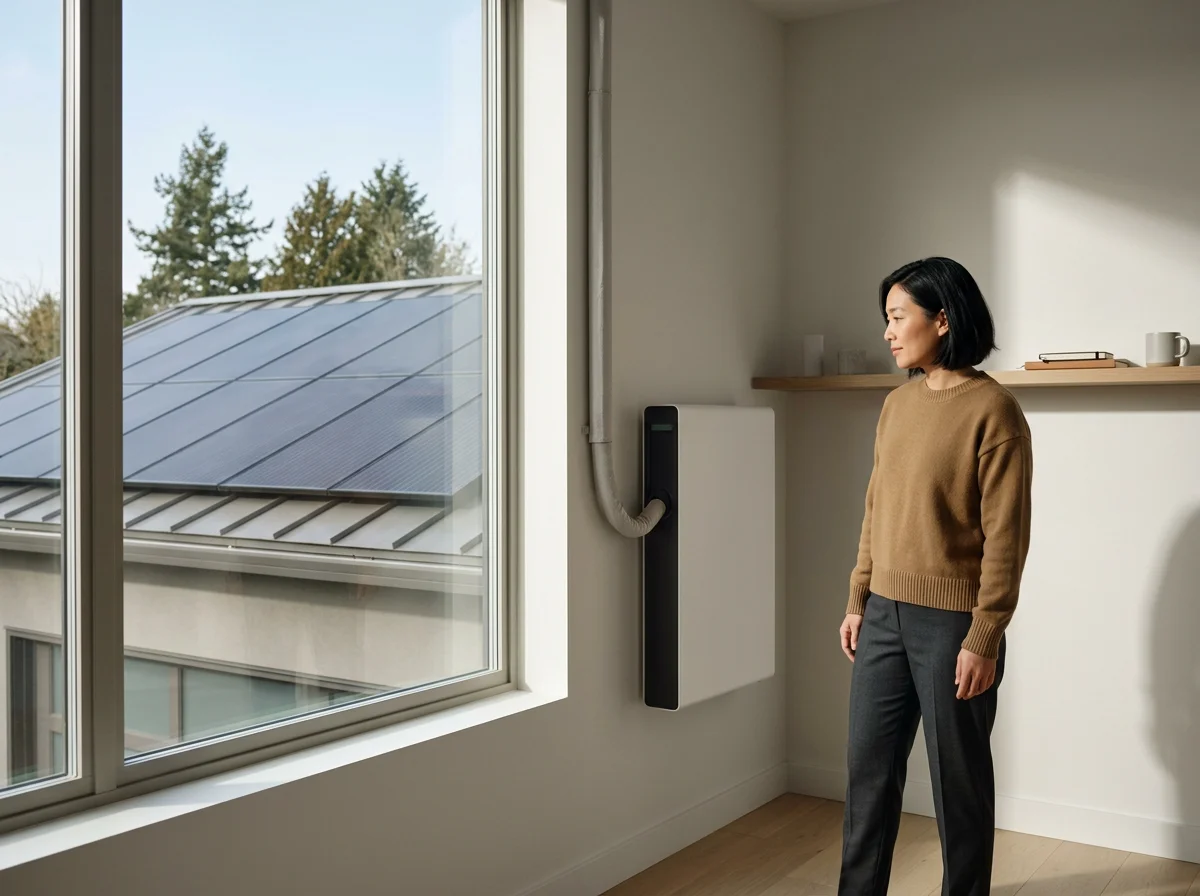
A solar-plus-storage system connects electricity generation with energy storage and household consumption.
During daylight hours, solar panels produce electricity. The home uses the electricity it needs at that moment. Depending on the system design and energy demand, surplus generation may be used to charge the battery or exported to the utility grid.
Later, when solar production falls, stored energy may be available to power the home. The system's controls determine how energy is used according to its configuration, operating settings, and available capacity.
A simplified example looks like this:
Morning: Solar panels begin generating electricity as sunlight increases.
Midday: The home uses solar power, and surplus energy may charge the battery.
Evening: The battery may supply stored energy when the panels produce less electricity.
Grid outage: If backup functionality is installed and configured, the system may supply selected loads within its power and energy limits.
Solar production resumes: Depending on the system and outage conditions, solar generation may help supply the home and recharge the battery.
Actual performance varies with weather, battery charge, energy consumption, equipment configuration, and other factors. A battery should not be assumed to provide unlimited electricity or run every household appliance indefinitely.
1. Understand Your Household's Energy Needs
Before installing battery storage, review how your household uses electricity. Two homes with similar floor plans can have very different energy requirements because of heating systems, cooking equipment, electric vehicles, and daily routines.
Look at your electricity bills and, if available, your utility's hourly or time-of-use consumption data. Identify when your home uses the most energy and which appliances are essential during an outage.
For example, some homeowners want backup power for refrigeration, lights, internet equipment, and a few outlets. Others may want to include a sump pump, medical equipment, or additional circuits. Electric heating, air conditioning, electric water heating, and vehicle charging can create substantially larger power demands.
Make a list of essential loads and discuss them with a qualified installer. The installer can assess the electrical requirements and help determine what the system may realistically support.
2. Decide What Needs Backup During an Outage
One of the most important planning decisions is whether the system should support selected circuits or a larger portion of the home.
Backup capability depends on the battery's usable energy, power output, inverter configuration, electrical panel, and the starting demands of connected equipment. Some appliances draw a significant amount of power when they start, even if their normal running demand is lower.
A professional assessment should consider both energy capacity and instantaneous power demand.
For instance, keeping a refrigerator, a few lights, and networking equipment running may require a different configuration from supporting central air conditioning or several large appliances simultaneously.
Ask the installer to explain which circuits will remain operational during an outage, how the system responds to high loads, and what happens if the battery reaches its minimum charge level.
It is also important to understand that some grid-connected solar systems shut down during an outage unless they have suitable equipment and an approved backup configuration. Existing solar panels alone do not guarantee that a home will have electricity when the grid fails.
3. Consider Denver's Weather and Seasonal Solar Production
Solar energy production changes throughout the year. Longer summer days can provide more potential generation, while shorter winter days and weather conditions may reduce output.
Denver's sunny climate can be favorable for solar generation, but actual results depend on roof orientation, shading, system design, panel condition, and local weather. Snow accumulation can also temporarily affect production.
Battery planning should account for seasonal differences rather than relying only on average annual solar output.
If the battery is expected to provide backup during a winter outage, discuss how the system will manage its charge and which loads should receive priority. During periods of low solar production, the battery may need to rely more heavily on stored energy from previous generation or grid charging, where permitted and configured.
An installer should review actual household consumption and the site's solar potential to develop realistic expectations.
4. Review Your Electrical Panel and Installation Requirements
Battery storage is an electrical installation, not simply an appliance that can be plugged into any outlet. The home may need a compatible electrical panel, appropriate protective devices, wiring, control equipment, and space for the battery and associated components.
The installer should inspect the electrical service and determine whether panel upgrades or other modifications are necessary. The location of the battery also matters because installation must follow applicable manufacturer instructions, electrical codes, fire-safety requirements, and local permitting rules.
Homeowners should ask about:
Equipment placement and access.
Required permits and inspections.
Electrical panel compatibility.
Backup circuit selection.
Utility interconnection requirements.
Monitoring and commissioning.
Maintenance and warranty responsibilities.
Do not assume that every property can use the same installation design. A qualified professional should assess the specific home and confirm the requirements before work begins.
5. Understand Utility Rules and Financial Considerations
The financial value of solar-plus-storage depends on more than the price of the battery. Utility billing arrangements, electricity rates, export compensation, system costs, and household consumption can all affect the outcome.
Some utility customers pay different electricity rates at different times. In those situations, a battery may be configured to shift some energy use to periods when stored electricity is more valuable. Other homeowners prioritize backup resilience over bill savings.
The right operating strategy depends on the utility's tariff, system settings, and household priorities.
Before purchasing, request an estimate that separates equipment, installation, electrical upgrades, permits, and other costs. Ask the installer to explain the assumptions used in any projected savings.
Tax credits, rebates, and utility programs can change over time and may have eligibility requirements. Verify current rules with official government and utility sources, and consult a qualified tax professional where appropriate. Do not base the purchase on an incentive until eligibility has been confirmed.
6. Choose an Installer Who Can Plan the Entire System
A successful battery installation begins with a clear assessment of the home and the customer's goals. A contractor should be able to explain the equipment, expected performance, backup limitations, and responsibilities associated with the installation.
Ask whether the proposed system is compatible with the existing solar equipment, whether any electrical upgrades are needed, and which circuits can be supported during an outage.
You should also understand how monitoring works, who handles warranty issues, and what support is available if the system reports an error.
Cascade Solar & Electric can be contacted through its official website to discuss residential electrical and energy-system needs and confirm which services are currently available.
Frequently Asked Questions
Can a Tesla Powerwall work with solar panels?
Yes, compatible solar equipment can be integrated with a Powerwall. The exact setup depends on the battery model, inverter or system architecture, and the existing installation. Compatibility should be confirmed by a qualified installer.
Will a Powerwall run an entire home during an outage?
Not necessarily. Backup performance depends on battery capacity, power output, the circuits connected, and household demand. Some homes may need to prioritize essential circuits or use multiple compatible batteries for greater capacity.
Can solar panels power a home during a grid outage without a battery?
Some solar systems can provide limited backup when equipped with compatible backup equipment, while many standard grid-connected systems shut down during outages. The answer depends on the system design and applicable safety requirements.
Does a Powerwall eliminate electricity bills?
No. A battery may help manage energy use, but savings depend on solar generation, electricity rates, household consumption, equipment costs, and utility rules. A home may still need to purchase electricity from the grid.
Final Thoughts
Pairing solar panels with a Tesla Powerwall can help homeowners store energy, manage electricity use, and prepare for selected backup needs. However, the system must be designed around the home's real energy demands rather than assumptions about how much power a battery can provide.
Review your utility bills, identify essential circuits, understand installation requirements, and compare the total cost with realistic benefits. A qualified installer can help determine whether solar-plus-storage is a practical option for your home.
Considering battery backup for your home? Visit Cascade Solar & Electric to discuss your project and confirm the available installation services.