

Rooftop Solar May Be Out—But Solar Windows Are In
Japan is investing in perovskite solar panels—ultrathin, flexible, and potentially game-changing. Could solar windows replace rooftop panels in the near future?

How Japan’s Perovskite Push Could Change the Future of Clean Energy
While the U.S. solar market is grappling with tax credit rollbacks and policy uncertainty, Japan is leaning into innovation—hard.
In pursuit of its net-zero emissions goal by 2050, Japan is making bold investments in perovskite solar panels, an emerging technology that could eventually replace traditional rooftop solar with ultra-lightweight, flexible, and even transparent alternatives.
And unlike conventional silicon-based panels, these perovskite cells use iodine—a resource that Japan has in abundance—helping to secure domestic supply chains and reduce dependence on imported materials.
What Are Perovskite Solar Panels?
Perovskite panels are made from a class of synthetic materials that can mimic the light-harvesting properties of silicon, but with far more flexibility and ease of production. These panels:
Can be ultra-thin—as little as 1 millimeter thick
Weigh about one-tenth as much as a traditional solar panel
Can be applied to curved surfaces, flexible materials, and even windows
Companies like Panasonic and Sekisui Chemical are already investing heavily, testing perovskite installations on domed stadiums, windowpanes, and plastic manufacturing surfaces.
If scaled successfully, Japan estimates that perovskite solar could supply up to 50% of its electricity demand by 2040.
What’s the Catch?
Like any emerging technology, perovskites aren’t perfect—yet.
The current limitations include:
Shorter lifespans than silicon panels
Lower energy efficiency in most commercial prototypes
The use of toxic lead compounds, which raises concerns about long-term safety and disposal
Still, if Japan succeeds in refining the technology—especially by improving durability and finding a lead-free formula—the potential applications are endless. Solar windows, building-integrated PV, and wearable solar fabrics could all become part of our daily lives.
Why This Matters for the World
Japan’s perovskite bet isn’t just about national energy independence. It represents a possible leap forward for global clean energy innovation.
If these thin, flexible, and aesthetically pleasing panels can overcome their limitations, they could revolutionize how and where solar is deployed—especially in dense urban areas or on structures not suited for heavy rooftop panels.
From skyscrapers to stadiums, perovskite technology could expand the solar landscape far beyond rooftops—and help us build a cleaner, brighter future for everyone.

Can Colorado’s Grid Keep Up? Why More Homeowners Are Turning to Battery Backup
Colorado homeowners are experiencing longer, more frequent power outages as demand on the electric grid grows. Learn how battery backup systems can protect your home from blackouts—and how adding solar can give you true energy independence.
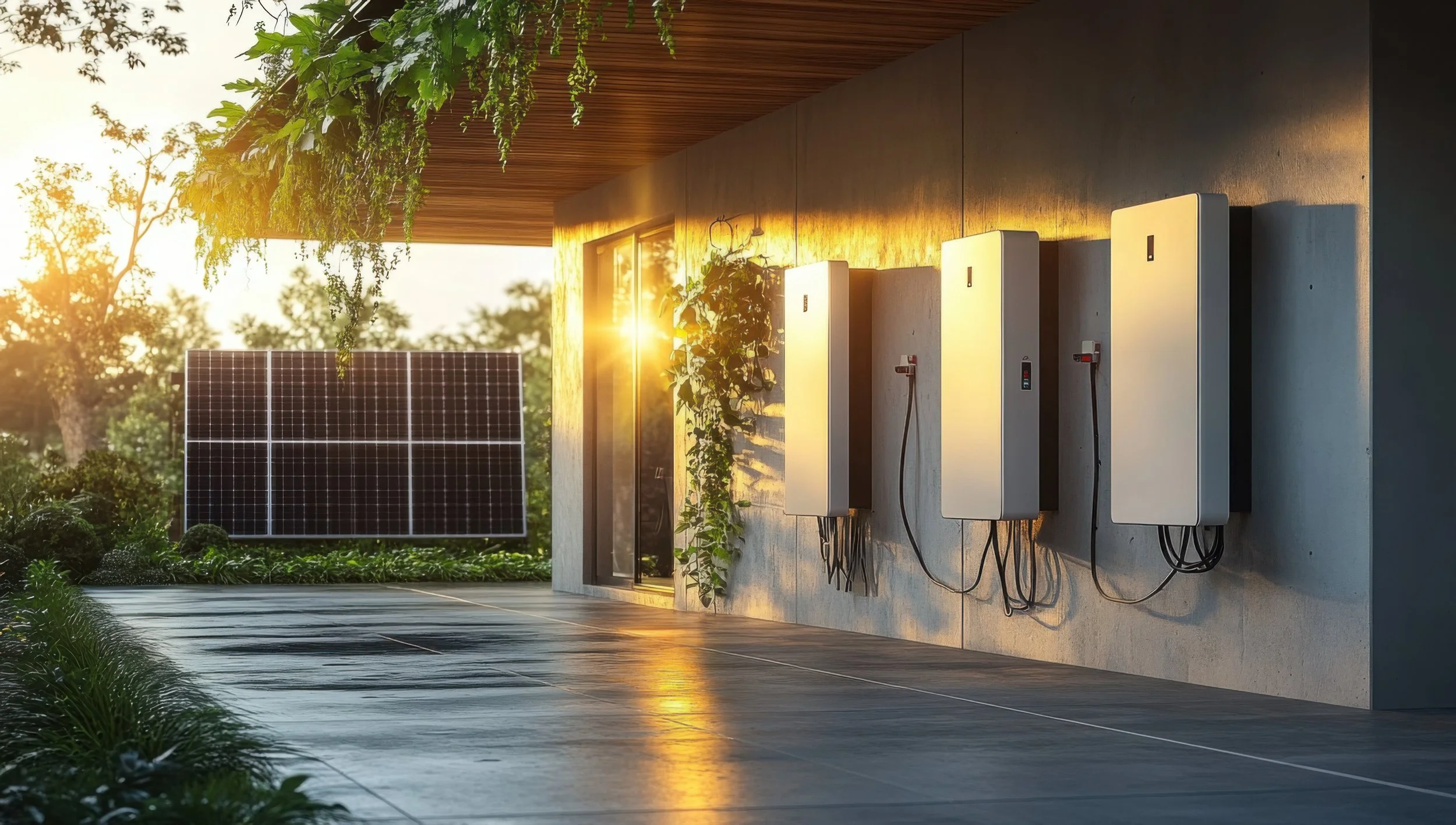
Colorado’s population continues to rise, with new homes and developments popping up to meet the demand. But there’s one big question on the horizon: Can our electric grid keep up?
Recent data suggests… maybe not.
Colorado’s Power Grid Is Under Pressure
Electricity demand is rising fast, and our aging infrastructure is struggling to keep pace. The effects are already hitting homeowners across the state. In fact, power outages are becoming not only more frequent—but significantly longer.
According to recent data, the average Xcel Energy customer in Colorado experienced nearly 6 hours of outage time in 2024. That’s a major spike from the 166-minute annual average seen across the previous decade. It’s not just one-off storms or flukes anymore—it’s a pattern.
Even worse, customer service wait times are growing, leaving many Colorado residents in the dark—both literally and figuratively—when issues arise. As climate events increase and the load on our grid grows, this trend isn’t likely to reverse anytime soon.
The Best Way to Prepare for an Outage? Avoid It Completely
Xcel Energy and other providers offer standard outage prep checklists—flashlights, backup phone chargers, and emergency kits—but let’s be honest: what you really want is to keep the lights on.
Rather than prepare for an outage, why not install a system that prevents one from affecting you in the first place? This is where battery backup systems come in.
What Is a Battery Backup System—and Why Is It a Game Changer?
Also called Energy Storage Systems (ESS), battery backups are cutting-edge home energy solutions that automatically provide power to your home during an outage. When the grid fails, the battery kicks in instantly to deliver electricity to your home’s essential circuits.
Modern systems are so seamless, you won’t even notice the switchover. There’s no fumbling with switches or waiting for a generator to fire up. The transition is instant, clean, and quiet.
Battery systems are also a smart option for families with medical needs, remote workers, or anyone who relies on stable, 24/7 power. And they’re more affordable and reliable than ever before.
Add Solar for a Complete, Resilient Home Energy Solution
If you want to take things even further, pair your battery with a solar energy system. Together, they create a powerful loop: solar panels charge your battery during the day, and your battery powers your home when the sun goes down or the grid goes out.
When combined with thoughtful energy use, this setup can keep your home running for days without touching the grid. It’s energy resilience, financial security, and peace of mind—all in one.
Ready to Take Control of Your Power?
Whether you're already generating solar power and want to add a battery backup, or you're just beginning to explore your home's solar + storage potential, we're here to help.
Our team specializes in designing and installing custom solar and battery solutions tailored to Colorado homeowners who want reliability in an increasingly uncertain energy future.
Get in touch to schedule a free energy consultation and explore what’s possible.

The Growing Demand for AI—and the Energy Crisis No One's Talking About
Artificial Intelligence is revolutionizing the way we live and work—but are we ready for its energy demands? This blog breaks down AI’s growing electricity consumption, its massive impact on U.S. infrastructure, and why solar and renewable energy must rise to meet the challenge. From data centers to NFL stadiums, here’s what it really takes to power the future of AI.

Artificial Intelligence isn’t just a tech trend anymore—it’s a full-blown cultural shift. From chatbots and image generators to automation in almost every industry, AI is already embedded in our daily lives. According to Statista, AI in the U.S. is expected to grow at a 26.95% annual rate, making it one of the largest expanding markets in the country.
In fact, a survey from Elon University (no, not Musk) found that over 52% of U.S. adults are now using large language models like ChatGPT, Gemini, Copilot, and Claude regularly. So the question isn’t whether demand for AI is growing—it clearly is. The better question might be: Are we ready for what it means?
AI's Hidden Cost: Electricity
AI doesn’t run on magic. It runs on massive amounts of power—mostly consumed by energy-hungry data centers that keep these models trained, updated, and operating 24/7.
The International Energy Agency (IEA) projects that global AI electricity demand will double to around 945 TWh by 2030. That includes an estimated 88 TWh of growth from the U.S. alone.
So what does that even mean in real-world terms?
Let’s Talk NFL Stadiums
Imagine powering all 30 NFL stadiums (yes, there are 32 teams—let’s not split hairs) for 5 hours each at their peak power usage of 10 MW. That’s about 50 MWh per stadium. Do that for all 30 stadiums simultaneously, and you’re at 1,500 MWh total.
To meet the projected AI energy demand, you’d need the equivalent of 58,667 games happening at once. Or, to stretch the metaphor even further, it’s the same as powering 215 full NFL seasons—every game, every team.
At that point, the Broncos and even the Cowboys better have won a Super Bowl or two, right?
So... Where’s That Energy Going to Come From?
AI is advancing whether we’re ready or not. That means America must prepare for the energy surge it will require. But slashing clean energy incentives, stalling solar and wind development, and making renewable access harder? That’s not going to cut it.
The only real solution is to grow energy production capacity, not shrink it.
America Needs to Power Up—Not Power Down
Whether we like it or not, the future is digital. And if we want AI to be part of it, we’re going to need to support the infrastructure that powers it. That includes:
Expanding renewable energy production (solar, wind, hydro)
Modernizing our electrical grid
Holding leaders accountable for sustainable energy policies
Fighting for continued access and funding for clean energy tech
This is a national issue, and it’s going to affect all of us—residentially, commercially, and economically.
Let’s not take a step backward. Let’s step forward, fully aware of the electricity demand AI is bringing, and prepared to meet it with the power of smart energy choices.