
Do You Need an Electrical Panel Upgrade Before Going Solar?
If you've started researching home solar, you've probably noticed the conversation revolves around panels on the roof, how many you need, what they cost, how much sun your home gets. What often gets left out is the panel inside your house: the one that has to handle all that new power once it starts flowing.
For a lot of homeowners, this comes as a surprise mid-project. You get quotes, pick a system size, feel good about the plan, and then hear "your panel might need to be upgraded first." It's not a sales tactic, it's usually just physics. Older electrical systems weren't built with solar, EV chargers, and battery storage in mind, so the wiring sometimes has to catch up before the rooftop system can go live.
How Do Home Solar Panels Actually Power Your House?

Rooftop solar panels convert sunlight into direct current (DC) electricity.
Since most homes run on alternating current (AC), that power passes through an inverter first, which converts it into the type of electricity your outlets and appliances actually use. From there, it flows into your home's electrical panel, where it's distributed to your circuits, or sent back to the grid if you're producing more than you're using at that moment.
Rooftop solar panels convert sunlight into direct current (DC) electricity. Since most homes run on alternating current (AC), that power passes through an inverter first, which converts it into the type of electricity your outlets and appliances actually use. From there, it flows into your home's electrical panel, where it's distributed to your circuits, or sent back to the grid if you're producing more than you're using at that moment.
That last step is the important one. Your panel isn't just a box of switches; it's the traffic controller for every watt entering or leaving your home. If it can't safely handle the added flow from a solar system, something has to give, and that "something" is usually your safety margin, not just your convenience.
What Exactly Is an Electrical Panel, and Why Does It Matter for Solar?
Your electrical panel, sometimes called a breaker box or service panel, is the point where power from the utility line splits off into all the individual circuits running through your home. Each panel has a maximum amperage rating, commonly 100, 150, or 200 amps in residential homes, along with a limited number of breaker slots.
Solar systems add a new source of power feeding into that same panel, and combined with your existing household load, that can push older or smaller panels past what they're rated to handle safely. This is especially common in homes built decades ago, when 100-amp service was standard and nobody was planning for rooftop solar, EVs, or heat pumps down the line.
Key Differences Between Panel Sizes
Here's a clear side-by-side comparison of common electrical panel sizes for solar:
| Feature | 100-Amp Panel | 150-Amp Panel | 200-Amp Panel | 225-Amp+ Panel |
|---|---|---|---|---|
| Typical home type | Small to mid-size homes | Mid-size homes | Most modern homes | Larger homes / high load |
| Good fit for solar? | Often needs an upgrade | Sometimes sufficient | Recommended standard | Ideal for solar + extras |
| Supports EV charger / battery? | Rarely, without upgrade | Limited capacity | Yes, with room to spare | Yes, best future-proofing |
| Common in homes built | Before the 1990s | 1990s–2000s | 2000s–present | Newer construction |
| Upgrade cost if needed | $1,500–$3,500 | $1,200–$3,000 | Usually no upgrade needed | Usually no upgrade needed |
How Do You Know If Your Panel Needs an Upgrade First?
A few signs tend to show up during a site evaluation: the home still has a 100-amp panel or an older fuse-based system, there's no open breaker slot left for the solar connection, you're planning to add an EV charger or battery backup alongside solar, or the panel is outdated enough that it no longer meets current code. None of these are unusual, and none of them mean solar is off the table, they just mean the panel needs attention before, or alongside, the solar installation itself.
What Happens During a Panel Upgrade?
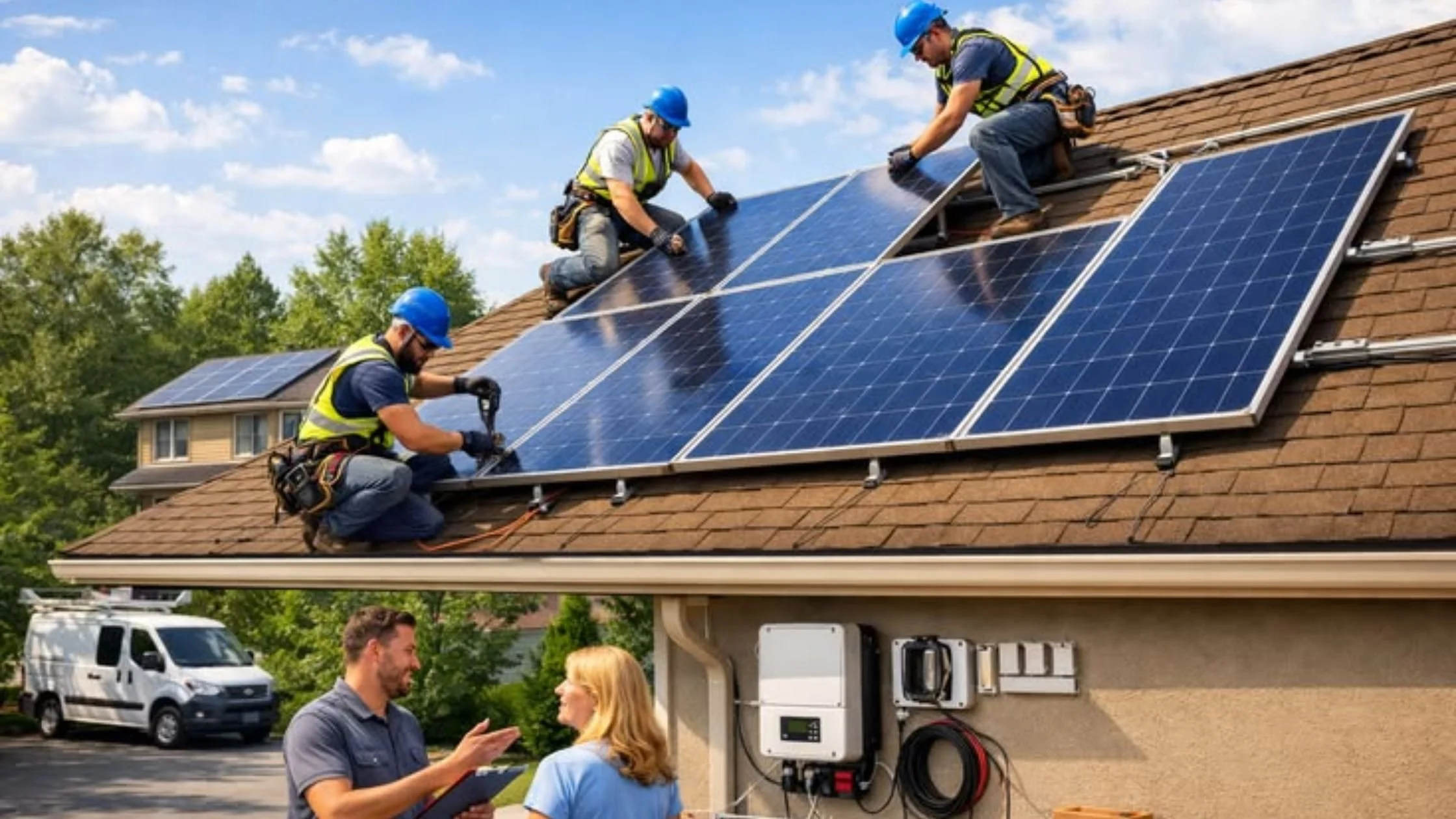
A panel upgrade typically means replacing the existing breaker box with a new one rated for higher amperage, usually 200 amps for most residential solar setups.
A licensed electrician handles the swap, briefly disconnecting power, installing the new panel and breakers, and wiring everything to current code.
Depending on your city, the utility company may need to disconnect and reconnect service, and a permit and inspection are usually required, which is standard for any electrical work, not something specific to solar. Most straightforward upgrades take a single day, though inspections and utility coordination can add a bit of time to the overall timeline.
Does a Panel Upgrade Add Much to the Cost of Going Solar?
It does add a line item, and it's worth budgeting for rather than being surprised by it later. That said, most homeowners find it's a manageable addition relative to the overall investment, especially since it's a one-time cost that also benefits the rest of the home's electrical system, not just the solar array. A properly sized panel makes it easier to add an EV charger or battery storage later without another round of electrical work.
This is usually where working with an experienced installer pays off. A team like Cascade Solar & Electric will typically flag panel capacity during the initial site assessment, so it's factored into your quote from the start instead of turning into a mid-project surprise. In most cases, it also makes sense to handle the panel work as part of the same project timeline rather than as a separate step later, coordinating both with one team avoids duplicate site visits and keeps permitting simpler since everything gets inspected together.
Frequently Asked Questions
Can I install solar panels without upgrading my electrical panel?
Sometimes, if your existing panel has enough amperage and open capacity for the new connection. A licensed electrician can confirm this with a load calculation during your site evaluation.
How much does an electrical panel upgrade typically cost?
Costs vary based on panel size, local labor rates, and utility coordination, but it's generally a modest addition compared to the total cost of a home solar system.
Will a panel upgrade delay my solar installation?
It can add some time for permitting and utility coordination, but most upgrades take a single day and are scheduled within the overall project timeline.
What size panel do I need for solar? Most modern residential solar setups pair with a 200-amp panel, though the right size depends on your home's total electrical load and future plans like EV charging.
Does a panel upgrade require a permit?
YES
Electrical panel work almost always requires a permit and inspection, like any other significant electrical upgrade.
Going solar is as much about what's happening inside your walls as it is about what's on your roof. A quick electrical assessment upfront can save you from delays later, and it's a conversation worth having early with whichever solar and electrical team you choose to work with, whether that's Cascade Solar & Electric or another licensed local installer.